
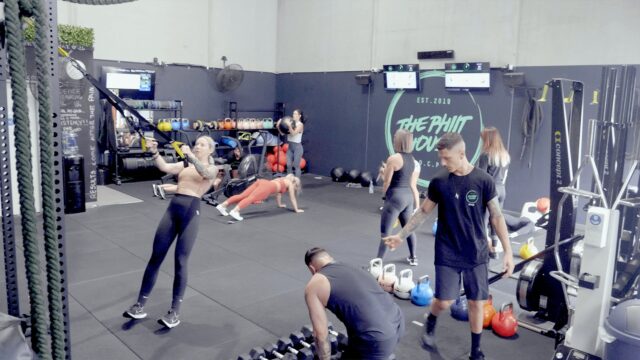
Walk into a modern gym today and you’ll notice something subtle but powerful. Fewer whiteboards, fewer shouted instructions, and far more screens guiding the flow of a class. That shift is not just aesthetic. It is driven by TV workout apps designed specifically for group classes.
These platforms bring structure, clarity, and consistency into sessions that were once chaotic. Instead of guessing what comes next, participants follow clear visual demos, timed intervals, and concise cues. For coaches, that means less micromanaging and more real coaching.
So what actually makes these systems effective, and why are they becoming standard in serious training spaces?
What a TV workout app actually does in group training

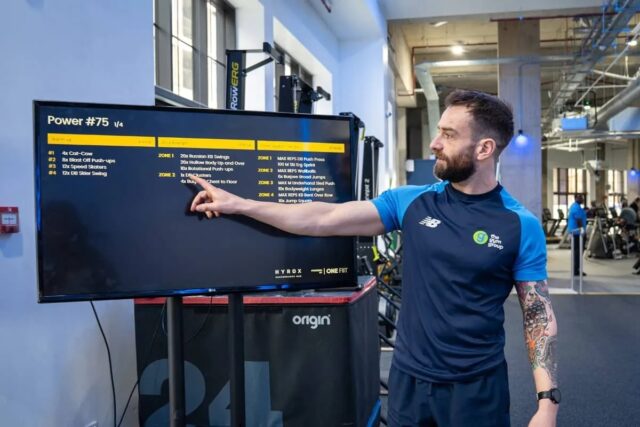
At its core, a TV workout app turns a simple screen into a command center for your entire class. It organizes movement demos, timing, and instructions into one synchronized experience.
Most platforms are built to eliminate confusion. Instead of repeating instructions to every participant, the system displays everything in real time. According to industry tools, workouts, timers, and instructions can be streamed directly to gym displays, creating a structured and consistent class flow .
This shift changes how sessions feel. You no longer rely on memory or constant coach direction. The class runs on a visible system that everyone can follow.
Here is what that typically includes:
- Movement demonstrations that show proper form for each exercise
- Timers that control intervals, rest periods, and transitions
- Clear cues that guide participants through each phase
- Pre-programmed workouts that remove guesswork
The result feels smoother, more professional, and easier to follow.
Why gym screens are becoming essential

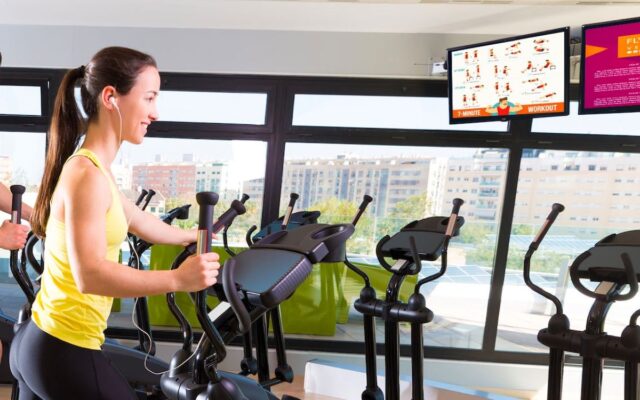
In many facilities, the biggest upgrade is not new equipment. It is the use of smart visual systems that guide training.
When you introduce well-positioned gym screens, the entire environment changes. Instead of crowding around a coach or asking what comes next, members can simply look up and stay on track. A setup like this allows workouts, timers, and demos to appear clearly across the room, keeping everyone aligned without interruption.
This matters more than it seems. Visibility affects engagement. If people can instantly see what to do, they move faster and stay focused.
A few noticeable improvements show up quickly:
- Participants transition faster between exercises
- Coaches spend less time repeating instructions
- Large groups stay synchronized without confusion
- The overall class feels more structured and premium
It is not about replacing the coach. It is about amplifying their impact.
Movement demos that actually improve performance
One of the biggest advantages of a TV workout app is visual learning. Not everyone processes verbal instructions the same way, especially in a fast-paced class.
Apps that include movement demos solve this instantly. Instead of imagining a movement, participants see it performed correctly. Many modern fitness apps include detailed exercise visuals and step-by-step guidance, which improves understanding and execution.
This leads to better performance and fewer mistakes.
There is also a subtle psychological benefit. When people feel confident about what they are doing, they move with more intent. That alone can improve the quality of a workout.
Important note: Visual guidance reduces the need for constant correction, allowing coaches to focus on individual form rather than repeating basics.
Over time, this creates a stronger training culture. People learn faster and rely less on guesswork.
Timers that keep everyone in sync

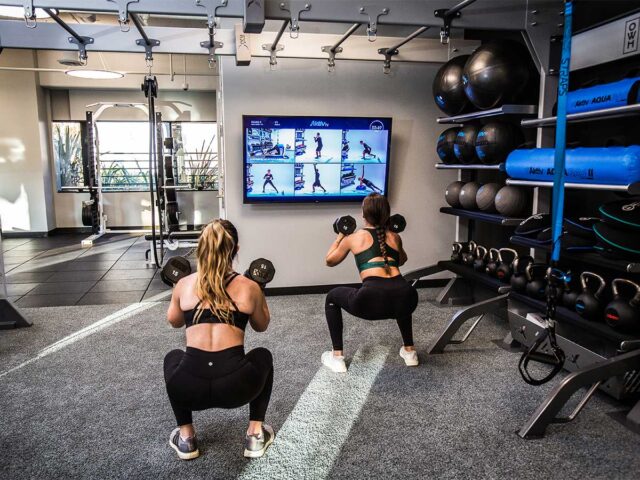
Timers are not new in fitness, but TV-based timers take them to a different level. Instead of one person tracking time, the entire room shares the same countdown.
Modern systems allow multiple timer formats, including interval, Tabata, and custom sequences, all displayed clearly on large screens. This removes the classic problem where participants lose track of time or start at different moments.
Here is what a well-designed timer setup brings to a class:
- Clear start and stop signals for every exercise
- Automatic transitions between intervals
- Visual progress bars that show how much time is left
- Audio cues that reinforce timing without distraction
When everyone follows the same clock, the energy of the class improves. There is less hesitation and more rhythm.
You can feel the difference in group workouts. Everything moves with purpose.
Clear cues that reduce confusion and fatigue
If you have ever been in a crowded class, you know how easy it is to miss instructions. Music is loud, people are moving, and the coach cannot repeat everything endlessly.
That is where clear on-screen cues come in. These cues act like a silent guide, telling participants exactly what to do next.
Some apps even include voice guidance or automated instructions, so users do not need to constantly watch the screen . This creates a balance between visual and auditory direction.
A well-designed cue system usually includes:
- Exercise names displayed clearly on screen
- Short, readable instructions
- Countdown prompts before transitions
- Visual highlights for the current movement
This reduces mental fatigue. Instead of thinking about what comes next, participants focus on execution.
And that is where better workouts happen.
A quick comparison of traditional vs TV-led classes

To understand the impact more clearly, it helps to compare the two approaches side by side:
| Feature | Traditional Class | TV Workout App Class |
| Instructions | Verbal only | Visual plus verbal |
| Timing | Manual or coach-led | Automated and visible |
| Movement guidance | Demonstration only | Continuous visual demos |
| Class consistency | Varies by coach | Standardized |
| Participant experience | Can feel chaotic | Structured and smooth |
This difference is not just technical. It shapes how people experience training.
When structure improves, retention often improves too.
Improving coaching quality
Here is something many gym owners do not expect at first.
When a TV workout app handles the structure, coaches actually become more effective. They are no longer stuck managing timers or repeating instructions.
Instead, they can focus on what really matters:
- Correcting form in real time
- Motivating individuals during tough sets
- Adjusting intensity based on the group
- Building stronger connections with members
That shift changes the role of a coach from manager to specialist.
And participants notice the difference quickly.
Choosing the right TV workout app for your setup

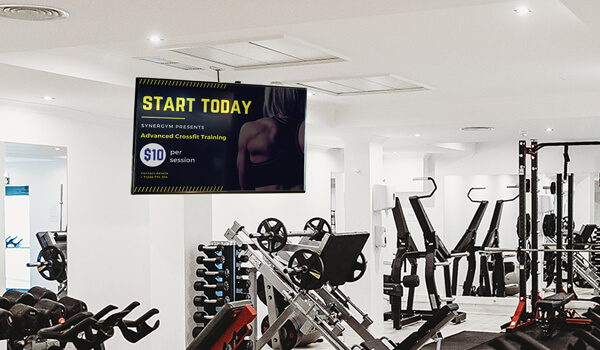
Not all systems are built the same. Some are basic timer tools, while others offer full class automation with demos and cues.
When evaluating options, it helps to look beyond surface features. Think about how the app fits into your actual workflow.
A few practical criteria can guide your decision:
- Does it support multiple workout formats like HIIT or circuits?
- Can you display content clearly on large screens or TVs?
- Are movement demos included or easy to integrate?
- Is the timer customizable for different class styles?
Also consider ease of use. A powerful system that takes too long to set up will slow you down.
The best tools feel simple during a live session. You should not need to think about the tech once the class starts.
Final thoughts
TV workout apps for group classes are not just a trend. They solve real problems that have existed in gyms for years.
Clear demos improve understanding. Timers create structure. Cues reduce confusion. When combined, they create a training environment that feels organized, efficient, and professional.
For participants, that means better workouts with less guesswork. For coaches, it means more time spent coaching instead of managing logistics.
If you have ever run or attended a class where everything flows effortlessly, there is a good chance a system like this was working behind the scenes.